Construction
Building in Antigua: What to Know Before You Break Ground
Land licences, designing for the climate, shipping-led timelines, and choosing a delivery model — what we tell clients before the first drawing is made.
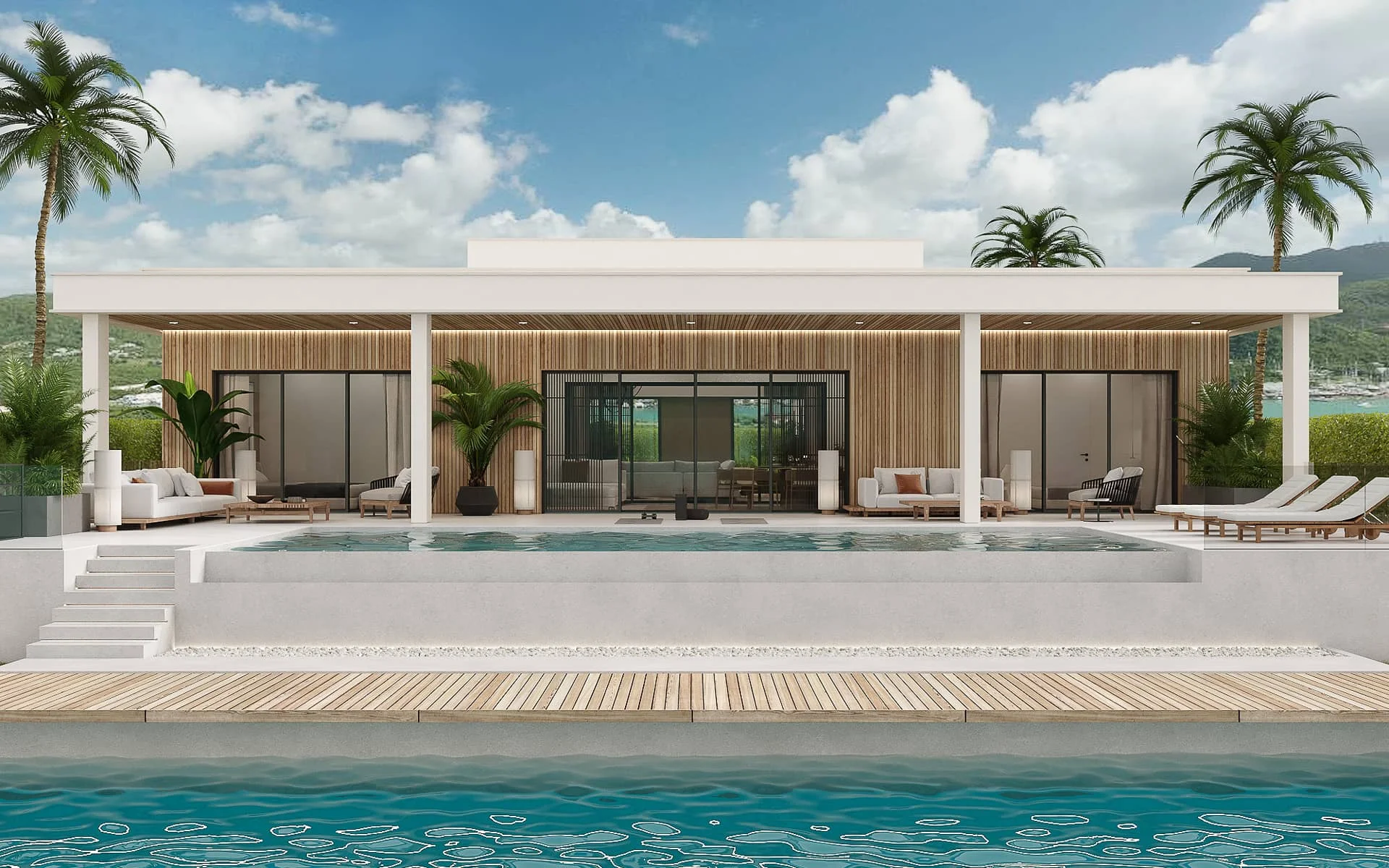
A custom build in Antigua can deliver exactly the home you want, on the site you choose, often for better value than buying an equivalent finished villa. It can also become an expensive education if you go in unprepared. Here's what we tell clients before the first drawing is made.
Start with the land — and the legal reality. Non-citizens need a Non-Citizens Landholding Licence, which runs 7% of the property value, plus stamp duty of 2.5% as the buyer and legal fees of 1–2% (plus ABST). These aren't hidden costs, but they surprise buyers who budget only for the land price. Factor them in from day one, and always retain your own lawyer — never share counsel with the seller.
Design for the island, not against it. Good Antiguan architecture works with the climate: cross-ventilation and orientation that reduce cooling loads, hurricane-rated openings and roof detail, cisterns and water storage because municipal supply can't be your only plan, and increasingly, solar — electricity here is expensive enough that generation pays for itself. A design that ignores these realities costs you every single month you own the home.
Understand the timeline honestly. Materials largely arrive by ship. That means procurement is a scheduling discipline, not an afterthought — a missing fixture can idle a site for weeks. Realistic builds run longer than the equivalent project in Toronto or Miami, and any builder who promises otherwise is telling you what you want to hear. The fix is front-loading decisions: the more that's specified and ordered before ground breaks, the fewer stalls later.
Choose the delivery model deliberately. The traditional route — separate architect, then tender to contractors — works, but it puts you in the middle of every conflict between drawing and site. Design-build, where one team carries the project from concept through completion, closes that gap: one point of accountability for budget, schedule, and quality. It's the model we run at MORA, and the difference shows most when something goes wrong — because on every build, something eventually does. What matters is who owns the problem.
Budget with a contingency, always. Ten to fifteen percent above the contracted figure is not pessimism; it's how experienced owners build. If you don't spend it, wonderful.
Building here is absolutely worth it — some of the most-loved homes on the island started as a client's sketch and a walk across an empty lot. The difference between a great build and a hard one is almost entirely in what happens before construction starts.
Planning a build in Antigua? Let's talk before the first drawing.
Construction Advisory